Rookwood Cemetery has been serving the people of Sydney since 1867 and remains the largest operating Victorian-era cemetery in the world and the largest necropolis in the Southern Hemisphere. Over more than a century, the way graves have been prepared has changed dramatically, reflecting advances in technology, workplace safety, community expectations and burial practices.
The Early Years: 1900–1940 – A Job Built on Strength and Skill
At the beginning of the 20th century, grave digging at Rookwood was entirely manual. Cemetery workers relied on shovels, picks, mattocks and wheelbarrows to excavate graves. Every grave was dug by hand, often in difficult conditions.
Rookwood’s soils varied from soft earth to heavy clay and sandstone, requiring gravediggers to adapt their techniques to each location. During wet weather, graves could fill with water, while summer heat made the work physically demanding.
Gravediggers of this era were highly skilled tradesmen. They needed to:
- Excavate graves to precise dimensions.
- Maintain stable grave walls.
- Work respectfully around existing monuments and neighbouring graves.
- Prepare burial sites in accordance with religious and cultural customs.
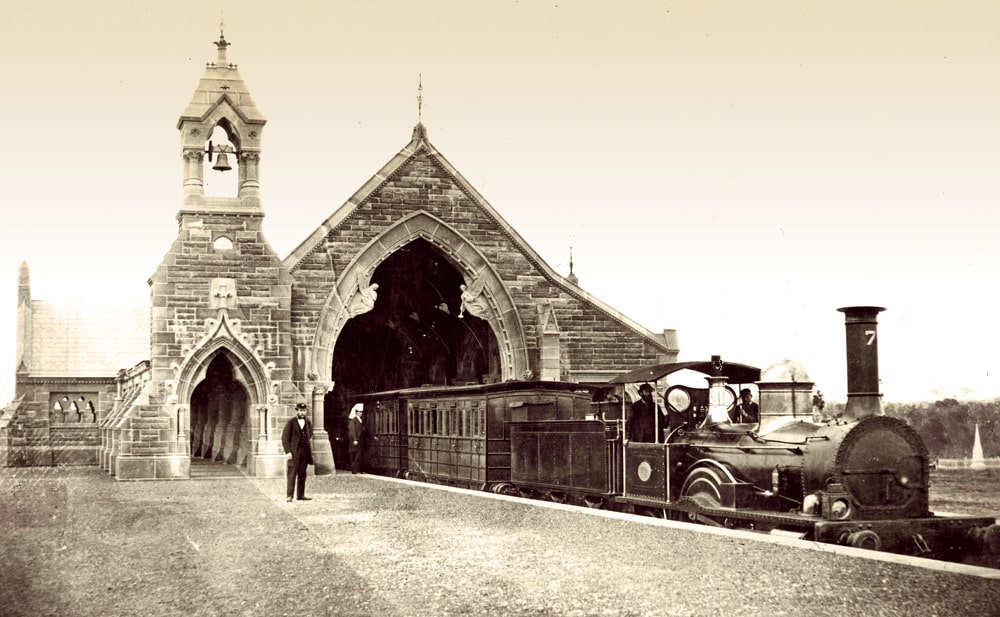
At this time, horse-drawn vehicles were still commonly used throughout the cemetery and funeral processions often arrived by the dedicated mortuary railway service that operated until 1948.
Post-War Change: 1940–1970 – The Introduction of Machinery
Following World War II, Australia experienced significant technological growth. Small mechanical excavators and earthmoving equipment gradually became available to cemeteries.
While much of the finishing work remained manual, machinery began assisting with:
- Opening graves.
- Moving excavated soil.
- Handling heavy materials.
- Constructing burial infrastructure.
Even with mechanisation, many sections of Rookwood still required hand excavation due to:
- Tight spaces between monuments.
- Heritage-sensitive areas.
- Religious sections with specific burial requirements.
The role of the gravedigger began evolving from labourer to skilled operator, combining traditional burial knowledge with new equipment skills.
Professionalisation of the Industry: 1970 – 2000 – From Gravediggers to Burial Technicians
During the late twentieth century, cemetery operations became increasingly professionalised. Improved occupational health and safety standards transformed how grave preparation was undertaken.
New developments included:
- Purpose-built excavation equipment.
- Safer grave shoring methods.
- Mechanical lowering devices.
- Formal staff training programs.
- Greater emphasis on risk management.
At Rookwood, staff increasingly worked across diverse cultural and religious burial sections. Understanding and respecting different burial traditions became an essential part of the role.
The title “gravedigger” gradually gave way to terms such as Burial Technician or Funeral Technician, reflecting the broader range of responsibilities involved in cemetery operations.
The Modern Era: 2000 -Today – Technology, Safety and Respect
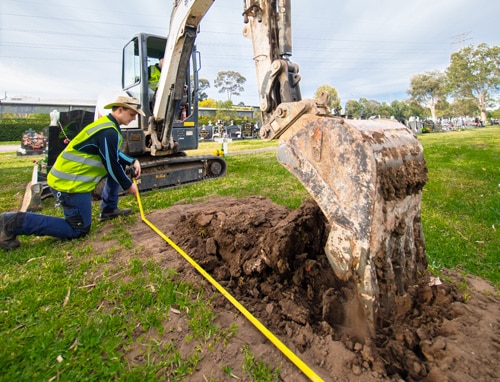
Today’s grave preparation at Rookwood combines modern machinery with traditional craftsmanship.
Modern burial teams utilise:
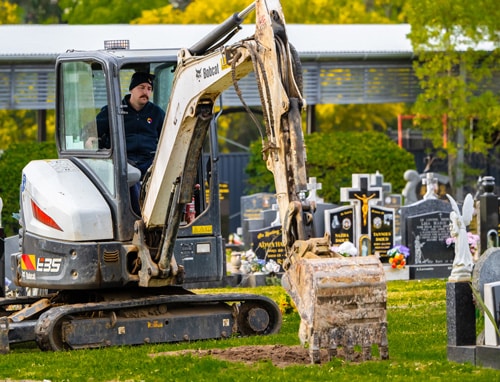
- Compact hydraulic excavators.
- Specialised grave-shoring systems.
- Survey and mapping technology.
- Digital burial records.
- Advanced lifting and lowering equipment.
Technology has improved efficiency, but precision remains essential. Operators must work carefully around historic monuments, heritage areas and existing graves, many of which date back more than 150 years.
Workplace safety is now a major focus. Modern procedures help protect staff, contractors and visitors while maintaining the dignity of every service.
The cemetery also serves more than 90 cultural and religious communities, meaning burial staff must understand a wide range of customs and traditions when preparing graves.
The Modern Era: 2000 -Today – Technology, Safety and Respect
Although the tools have changed, the core purpose of grave digging at Rookwood remains the same as it was over a century ago: to provide a dignified and respectful resting place for the deceased and a meaningful place of remembrance for families.
Today’s burial teams continue a tradition established by generations of cemetery workers who have cared for Sydney’s dead since the nineteenth century. Whether using a shovel in 1900 or a modern excavator in 2026, the work requires precision, professionalism and respect.
As Rookwood continues to evolve, grave preparation remains one of the cemetery’s most important and enduring functions—connecting the past, present and future of one of Australia’s most significant heritage landscapes.
Did you Know?
- Rookwood was established in 1867 and remains one of the world’s largest operating Victorian-era cemeteries.
- More than one million interments have taken place at Rookwood.
- The cemetery once had its own railway service, carrying both mourners and coffins directly to the cemetery.
- Modern apprentice burial staff still train in practical grave preparation techniques before working on active burial sites.